





The display in a patisserie or café is where customers make their buying decision in a matter of seconds. The right cake display cabinet does more than keep your products fresh; it shows off their colours, textures and the craftsmanship behind them in the best possible light. The wrong choice means dried-out cream, fogged-up glass and wasted energy. In this guide, drawing on the experience we have gained at Zirvetek Soğutma from years of building made-to-measure cabinets, we have gathered the 10 points you should consider when making your choice.
1. Measure Your Space and Traffic Flow First
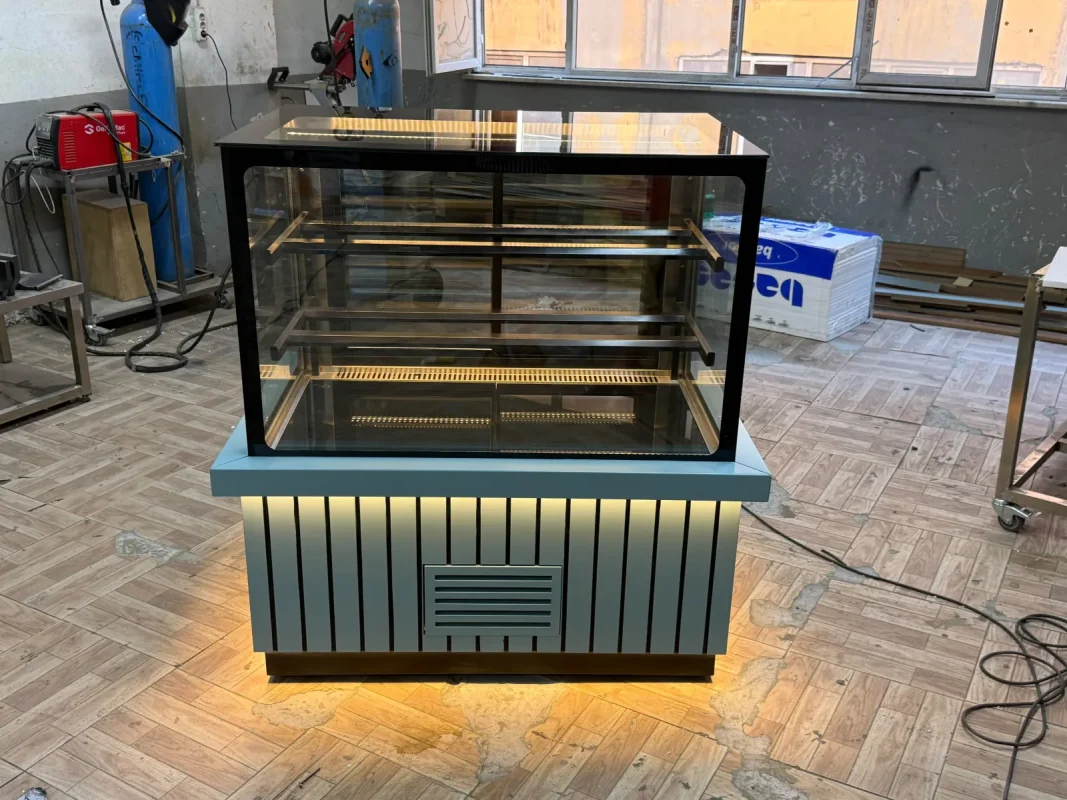
The size of the cabinet should be determined not only by the space it will fill, but also by how customers and staff move around it. Leave at least 90–100 cm behind the counter so staff can move around comfortably, and enough room on the customer side so that people don’t crowd in front of the display. An island-style square cake display becomes a focal point in the middle of the room, while upright models placed against a wall increase capacity in tight spaces.
2. Choose the Cabinet Type to Suit Your Products
Do your sales lean towards fresh cream cakes, dry pastries, or desserts and individual portions? Your product range has a direct effect on the type of cabinet you need:
- Square / island cabinets: Visible from all four sides, ideal for boutique cafés.
- Upright cake displays: Plenty of shelving on a small footprint; suitable for drinks and cake slices.
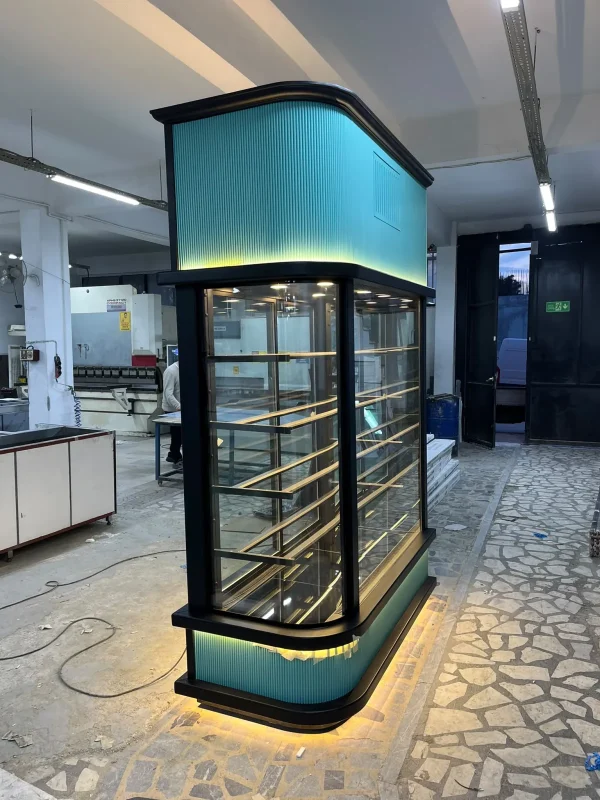
- Oval-glass cabinets: A premium look that works well at entrances and in window areas.
- Rotating cylindrical displays: Show products off through 360° and make an eye-catching display feature.
3. Glass Type: Straight, Curved or Oval?
The glass is the shop window of a display cabinet. Tempered glass provides safety against impacts, while double glazing reduces fogging. Curved and oval glass show products from a wider angle, whereas straight glass gives a modern, clean look. Make your choice with your venue’s concept in mind.
4. Refrigeration System: Static or Fan-Assisted?
Because static cooling does not force air around the cabinet, it slows down surface drying on cream-filled and cream-topped products. Fan-assisted cooling, on the other hand, distributes the internal temperature more evenly and recovers quickly at busy spots where the doors are opened frequently. For many patisseries, the right answer is to plan the compartments differently according to product type. Cake display cabinets are generally kept at an internal temperature of +2 to +6 °C; confirm the right range for your products with your supplier.
5. Humidity Balance and Fogging
Dry air dries out cakes, while excess humidity fogs up the glass. In a quality cabinet, humidity balance is designed together with the glass construction, air circulation and door sealing. If you operate in a hot and humid region in particular, be sure to ask about this.
6. Lighting: Make Products Shine Without Heating Them
LED lighting delivers vivid colours without adding heat to the products and reduces energy consumption. The colour temperature of under-shelf and ceiling LEDs should be chosen to suit your product type: natural white light works well for cream and fruit-based products, while a warmer tone brings out chocolate and caramel shades.
7. Shelf Layout and Capacity
Shelf spacing should be adjustable to suit product height. Glass shelves let light reach the lower levels. When planning capacity, factor in not just today’s sales but your busy seasons too.
8. Materials, Hygiene and Cleaning
Interior surfaces should be stainless steel or other easy-to-clean materials, and corners should be designed so that they don’t trap dirt. Sliding rear doors let staff pick up products quickly and also make it easier to reach every area for cleaning.
9. Fit with Your Concept and Brand
The cabinet is part of your store’s interior design. Details such as the body cladding (wood, compact laminate, painted or stainless steel), base LED strips and a branded header strengthen your brand. The biggest advantage of made-to-measure production is that the cabinet becomes a seamless part of your space.
10. Service, Installation and Delivery
Installing and commissioning the cabinet is at least as important as the product itself. Working with a manufacturer that handles the site visit, project drawing, production and installation under one roof minimises measurement errors, delays and mismatches. At Zirvetek Soğutma we manage this process end to end, and as well as projects in Turkey, we ship to projects abroad with secure packaging.
The Right Location: Where Should You Place the Cabinet?
Even the best cabinet loses efficiency in the wrong spot. Avoid placing a display cabinet right in front of a shop window that gets direct sunlight, next to heat sources such as ovens and hobs, or directly in the path of air-conditioning airflow. These spots make the refrigeration system work harder than necessary and cause fogged glass and fluctuating internal temperatures. Ventilation gaps should be left at the back and sides of the cabinet so that the refrigeration unit can breathe.
From the customer’s point of view, the cabinet should be visible from the entrance and positioned so that people can stand comfortably in front of it. Cake displays placed near the till create an opportunity for extra sales at the moment of payment. If your premises are long and narrow, upright models work better; if they are wide and spacious, island-style square cabinets give better results.
Energy Efficiency and Running Costs
A display cabinet runs every day of the year, often 24 hours a day. That is why running costs matter as much as the purchase price. LED lighting, a well-insulated body, quality door seals and a correctly sized refrigeration unit all directly reduce energy consumption. Using night blinds or covers after hours, and not running the cabinet empty unnecessarily, also helps keep your bills down.
Made-to-measure production has an important advantage here: because the cabinet is built exactly as large as you need, you don’t have to cool empty space.
Door and Service Type
On the staff side, sliding rear doors make it quick and hygienic to take products out. Cafés that use self-service can opt for models with front doors; however, front doors that are opened frequently have a greater effect on the internal temperature. Choose your door type to suit your sales model.
Daily and Weekly Maintenance Tips
- Daily: Wipe the glass inside and out with a suitable glass cleaner; remove crumbs from the shelves and bases.
- Weekly: Check the door seals and clean the drains and drainage points.
- Monthly: Clean the dust from around the condenser; a dusty condenser reduces efficiency.
- Periodically: Have the refrigeration system checked by an authorised service provider at least once a year.
5 Common Mistakes When Choosing a Cake Display
- Choosing too small a capacity based only on today’s product count.
- Buying a cabinet with drying airflow for cream-based products.
- Not leaving ventilation space around the cabinet.
- Not choosing the colour temperature of the lighting to suit the products.
- Thinking about how it fits the interior design as an afterthought; the cabinet is the most visible part of your space.
Quick Checklist
| Question | Why It Matters |
|---|---|
| What temperature do the products I sell need to be kept at? | It determines the cooling type and compartment layout. |
| From which side will the cabinet be viewed? | It influences the choice between square, upright and oval models. |
| How will staff take products out? | It determines the door and service type. |
| What is the concept of the venue? | It guides the choice of cladding, colour and LEDs. |
| Where will it be installed? | It determines the installation and shipping plan. |
Frequently Asked Questions
What temperature should a cake display cabinet run at?
A range of +2 to +6 °C is generally preferred for fresh cream cakes and cream-based products. We will work with you to set the right range for your products.
How long does it take to build a made-to-measure cake display?
Lead time depends on the cabinet type, quantity and choice of cladding. Once the site visit and project approval are complete, we give you a firm delivery date.
Can the colour and cladding be matched to my existing interior?
Yes. Body colour, cladding, LED colour and logo application are all specified to suit the project.
To explore different models, browse our cake and dessert display cabinets category, or take a look at our projects for completed installations.
Would you like a free site visit and quote for your project? Share your dimensions and requirements, and we’ll come back to you with a solution tailored to you.
Request a Quote · Message us on WhatsApp · +90 533 454 56 07


