





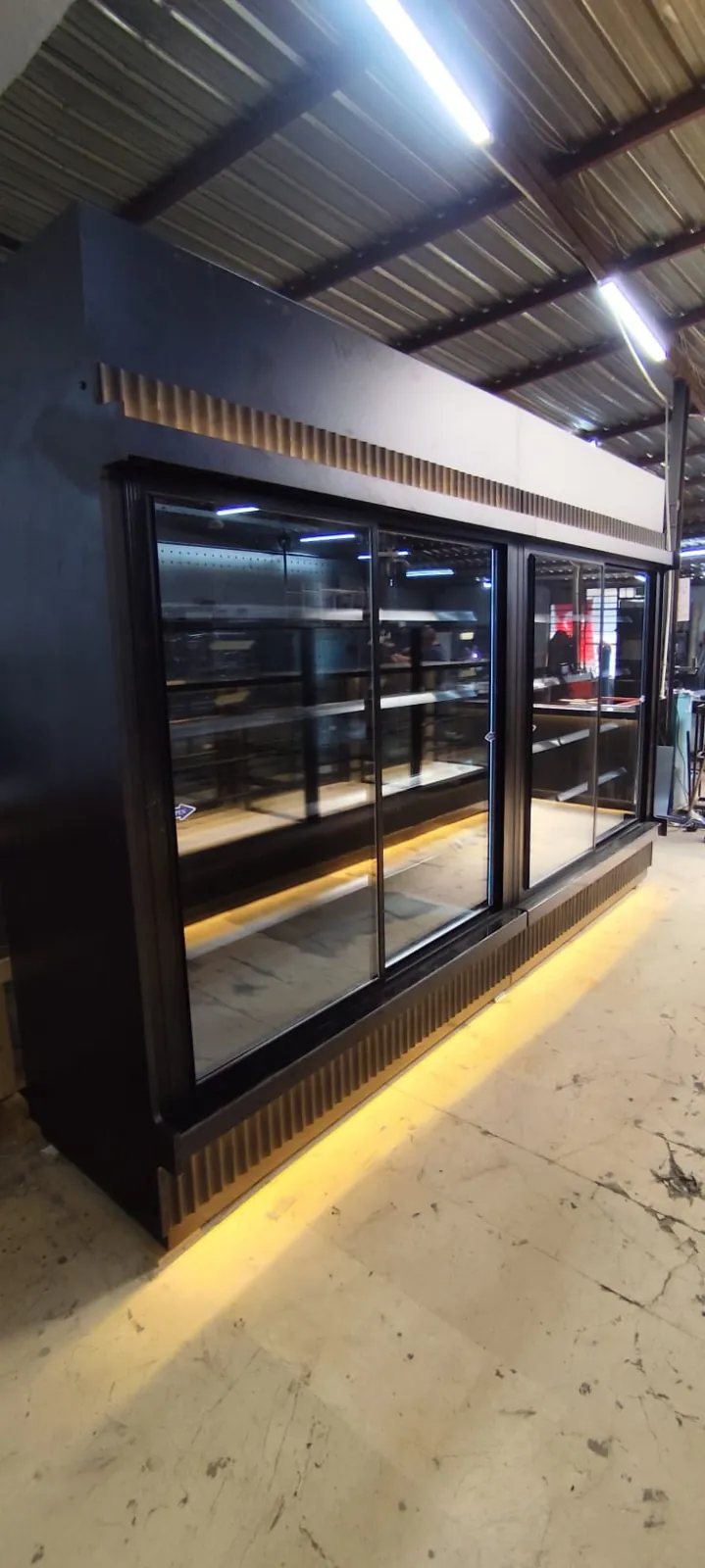

A refrigerated display cabinet is one of the few appliances in a patisserie, deli or grocery store that runs twenty-four hours a day, seven days a week. The compressor, fans, lighting and defrost system draw power non-stop, and that consumption takes a sizeable share of the monthly electricity bill. The good news: display fridge energy saving usually starts not with buying a new unit, but with putting your existing cabinet in the right place, cleaning it regularly and running it with the right settings. In this article, as a workshop that builds made-to-measure refrigerated display cabinets, we have gathered the energy losses we come across most often in the field, along with practical methods you can apply right away to reduce them.

Where does the energy go in a display cabinet?
To save energy, you first need to know where it is being used. The main components that consume electricity in a display cabinet are:
- Compressor: Most of the consumption comes from here. Every bit of heat that gets into the cabinet means the compressor has to run longer.
- Evaporator and condenser fans: They circulate cold air inside the cabinet and release the heat from the condenser into the room. A dirty condenser increases the load on both the fans and the compressor.
- Lighting: The light that shows off your products both draws power and gives off heat inside the cabinet.
- Defrost: The cycle that melts the ice building up on the evaporator is a significant energy item, especially with electric defrost.
- Glass and frame heaters: On some models, heating elements used to prevent fogging run either continuously or under control.
The conclusion from this list is simple: the core logic of energy saving is to reduce the heat entering the cabinet and make it easier for the cabinet to reject heat to the outside. Almost every method below serves one of these two principles.
Correct placement: the cabinet needs to breathe
Where a display cabinet is placed directly affects how much energy it will use over its lifetime. A poorly placed cabinet, however well it is built, is constantly fighting against itself.
Keep it away from sunlight and heat sources
A cabinet that gets direct sunlight through the shop window fills up with heat all day long. Likewise, cabinets placed right next to an oven, hob, coffee machine, heated bain-marie or radiator work harder than they should. If possible, plan refrigerated units on a separate line from hot equipment; if they must sit side by side, leave an insulated spacer module or a gap between them.
Watch out for air-conditioning and doorway drafts
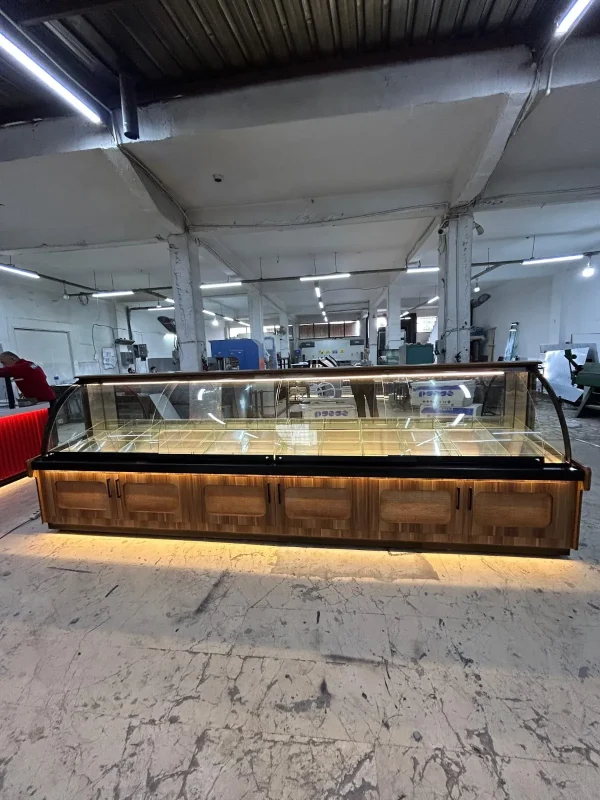
Especially on open-front counters and curved-glass counters, air blown by the air conditioner or wind coming in through the shop door disrupts the cold air curtain inside the cabinet. Cold air spills out, warm air gets in and the compressor runs without a break. Simply turning the air-conditioning vents away from the cabinet brings a noticeable improvement.
Leave clearance for the condenser
The compressor and condenser have to release the heat taken from inside the cabinet into the room. If the back of the cabinet is pushed right up against the wall, boxes are stacked in front of the lower vents or the machine compartment is enclosed in a cupboard, this heat cannot escape. Always follow the ventilation clearances recommended by the manufacturer and never block the vents. In made-to-measure projects we plan for this from the very beginning, at the layout drawing stage; we explain the process in detail in our article on the made-to-measure production process.
Condenser cleaning: the cheapest and most effective method
A dirty condenser tops the list of energy losses we see in the field. Over time, the condenser’s thin fins become coated with dust, flour, lint and grease vapour. This layer acts like a blanket: heat cannot escape, the compressor runs longer and under more strain, and both energy consumption and the risk of breakdown go up.
- In normal environments, check the condenser at least once a month and clean it if needed.
- In floury or greasy environments such as bakeries, patisseries and kitchens, check it more often.
- Always switch off the power before cleaning.
- Clean along the direction of the fins with a soft brush or the brush attachment of a vacuum cleaner, taking care not to bend the fins.
- For heavy grease build-up, call in an authorised service rather than tackling it yourself.
On its own, this simple routine often lets the cabinet run more calmly and hold its internal temperature more easily.
Keep the cold air inside: seals, doors and night blinds
Door seals and door habits
On upright cabinets with doors and on counters with rear sliding doors, the sneakiest energy loss comes from the seals. A torn, hardened or displaced gasket lets warm, humid air leak in constantly, even with the door closed. This lengthens the compressor’s running time and also causes faster icing on the evaporator.
There is a practical way to check the seals: place a strip of paper in the door opening, close the door and pull the paper. If the paper slides out easily, the seal is weak at that point. Repeat the test at several points along all four edges of the door.
- Wipe the seals regularly with warm, mildly soapy water; dirt and sugar residue make the gasket stick and tear.
- Make sure the doors close fully on their own; hinges and sliding rails need adjusting over time.
- Discourage staff from leaving doors open or holding them open for long periods while stocking. Do bulk restocking in one planned go.
- On sliding doors, clean rails let the door close without leaving gaps.
Night blinds and night mode
Open-front counters, especially deli, dairy and drinks cabinets, keep losing cold air to the room even when the store is closed. This is exactly what a night blind is for. Pulled down at closing time, an insulated or aluminium-coated blind covers the front opening and keeps the cold air inside the cabinet.
To get the most out of a night blind, keep the following in mind:
- Pull the blind down every evening as part of the same closing routine; skipping it for a few days wipes out a large part of the savings.
- Make sure the bottom edge of the blind comes all the way down without catching on products.
- If the control panel has a night mode or a separate set-point option, switch the lighting off while the store is closed.
- In curved-glass serve-over counters, moving products to the cold room in the evening or covering them improves both product quality and energy consumption.
If you are planning a new open counter, including a night blind in the project from the start gives a much cleaner result than adding one later.
Thermostat setting, load line and product placement
Don’t run it colder than necessary
Turning the thermostat down to the lowest setting on a “the colder the better” basis is one of the most common causes of wasted energy. Every product group has an ideal range: generally +2/+6 °C for cream cakes and 0/+4 °C for deli products, while slightly higher values are enough for drinks. A cabinet set lower than the product needs uses more energy and also causes quality problems such as drying out and freezing in some products. Set it according to what your product really needs and check the internal temperature from time to time with a separate thermometer.
Don’t exceed the load line
Open counters and fan-assisted cabinets have a marked load limit on the shelf edges or side panels. Products stacked above this line cut through the cold air curtain, disrupt air circulation and create warm spots inside the cabinet. The result: the compressor runs longer and the products at the front stay warmer than they should. Keep products below the line and never block the air intake and discharge vents.
Don’t put hot products in the cabinet
A tray of börek fresh out of the oven or any freshly cooked hot product is a heavy heat load for a display cabinet. A display cabinet is designed not to cool products down, but to keep already-cooled products at the right temperature. Let hot products rest until they approach room temperature (within the time allowed by food safety rules), then chill them in a cold room or blast chiller before putting them on display.
Place products according to their temperature needs
The temperature is not the same at every point inside the cabinet; areas close to the air outlet can be colder, while the front and top can be relatively warmer. Putting the most sensitive products in the coldest zone and the more tolerant ones on the front and upper shelves lets you keep everything within the safe range without needlessly lowering the thermostat.
LED lighting and defrost management
Old-style fluorescent or halogen lighting creates a double load: the electricity it uses and the heat it releases inside the cabinet. LED lighting delivers the same lighting effect with much lower consumption and far less heat. LED strips hidden under the shelves that show the product in its true colours pay off in terms of both energy and sales. If your current cabinet has old-style lighting, you can get service support for a suitable LED conversion.
On the defrost side, the goal is to melt the ice only as much and as often as needed:
- If ice is building up excessively on the evaporator, the cause is usually a leaking seal, a door that is opened too often or high humidity in the room. Fix the cause first.
- Do not change the defrost cycle settings yourself; they should be adjusted by an authorised technical service according to the site conditions.
- Make sure the defrost water drain line is not blocked; standing water leads to re-icing.
Action list: what, how often and what it achieves
You can share the table below with your store team and use it to track your energy-saving routines.
| Practice | Frequency | Effect |
|---|---|---|
| Condenser cleaning | Once a month (more often in floury/greasy environments) | Makes heat rejection easier, reduces compressor load |
| Seal check and cleaning | Wipe weekly, paper test monthly | Prevents warm air leaks and icing |
| Lowering the night blind | Every evening | Reduces cold air loss outside opening hours |
| Thermostat and internal temperature check | Daily | Prevents running at needlessly low temperatures |
| Load line and vent check | Every time you stock products | Protects air circulation, prevents warm spots |
| Placement and ventilation clearance | At installation and whenever the layout changes | Stops the cabinet from being constantly overworked |
| LED lighting | One-off conversion | Lowers electricity consumption and internal heat load |
What to look for in terms of energy when buying a new cabinet
If you have reached the limit of what you can improve on your current cabinet, or you are opening a new store, the best time to think about energy efficiency is at the selection stage. When planning a new upright display cabinet or counter, ask about the following:
- The right size: A cabinet much larger than you need also cools empty space. Size the shelves and display area to your actual product volume.
- Doors or open front: Where self-service speed is not critical, a cabinet with doors keeps the cold air in far better than an open-front counter.
- Insulation quality: The thickness and continuity of the body insulation determine the cabinet’s consumption throughout its lifetime.
- Glass type: Double glazing or thermally insulated glass brings advantages for both energy use and fogging.
- Cooling system: Choosing a static or fan-assisted system that suits your product affects both product quality and consumption.
- Layout plan: The cabinet’s position in the store and its distance from hot equipment and the door should be planned from the start.
If you are wondering how these criteria affect the price, take a look at our article on the factors that determine display cabinet prices. Equipment that looks a little more expensive in the short term can pay for itself over the years through lower running costs.
Frequently Asked Questions
Does switching the display cabinet off at night save energy?
Switching the cabinet off completely while there is product inside is not recommended; the internal temperature rises above the safe range, and in the morning the cabinet has to work hard for a long time to cool the product down again. A better approach is to use a night blind, switch off the lighting and move sensitive products to the cold room.
How often should I clean the condenser?
In a normal store environment, a monthly check is enough. In environments with a lot of flour and grease vapour, such as patisseries, bakeries and kitchens, it needs to be checked more often. Don’t forget to switch off the power before cleaning.
Does setting the thermostat to the coldest position protect products better?
No. Every product has an ideal temperature range. A lower temperature than necessary not only wastes energy but can also cause drying, freezing or texture damage in some products. Set it according to your product’s needs.
Can I have LED lighting fitted to my old cabinet?
In most cases, yes. However, the wiring and fitting details vary depending on the cabinet’s construction. The conversion should be carried out by an authorised technical service in a way that suits the cabinet’s electrical setup.
Energy efficiency starts with displaying the right product in the right cabinet under the right conditions. To explore solutions suited to your business, browse all our products, get in touch with us for advice on your current layout, or share your dimensions and request a quote.
Would you like a free site visit and quote for your project? Share your dimensions and requirements, and we’ll come back to you with a solution tailored to you.
Request a Quote · Message us on WhatsApp · +90 533 454 56 07


